Income and Expense Tracking
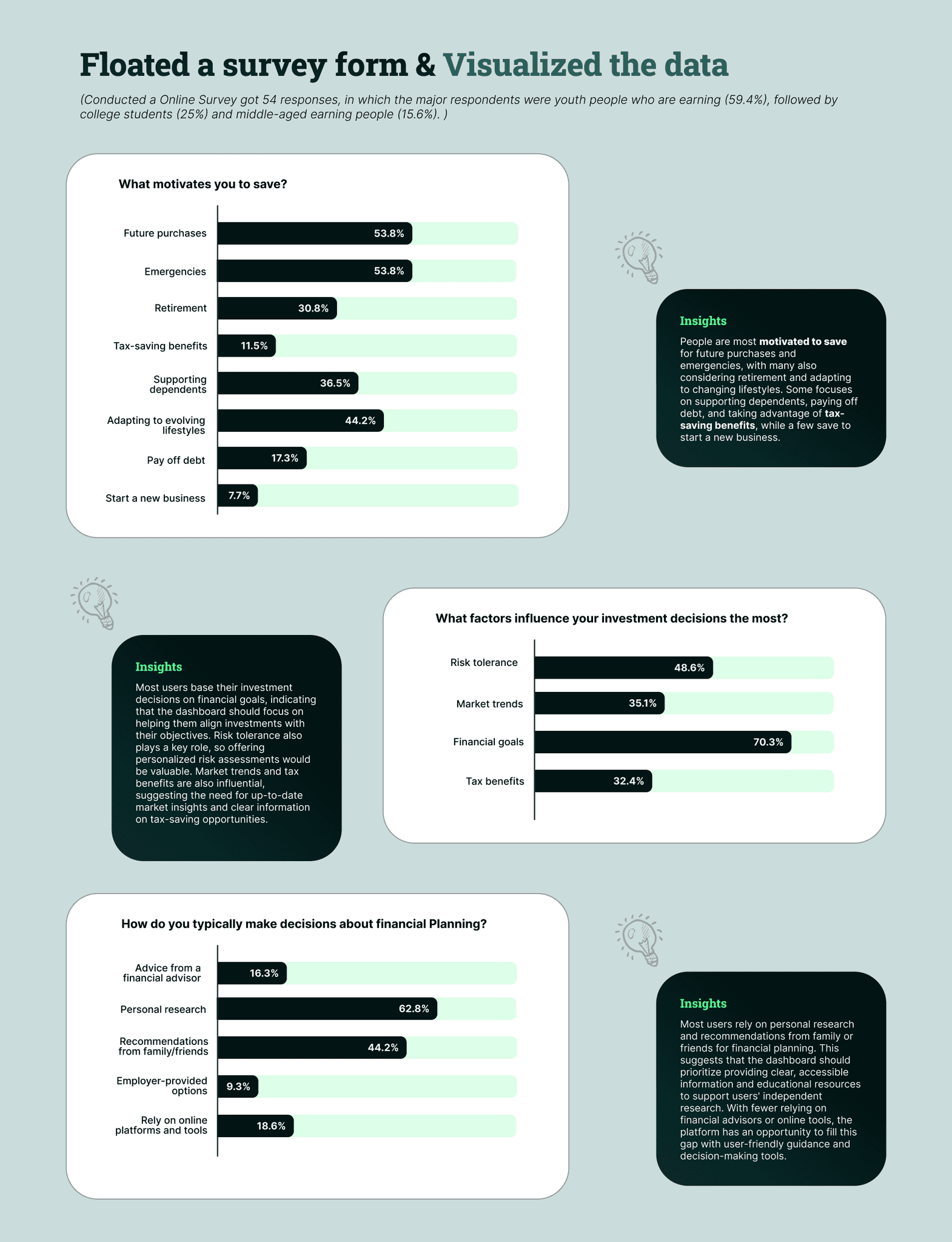
The insights suggest a lack of consistency in tracking expenses, with many relying on traditional methods like paper. This indicates a potential comfort with familiar tools or limited awareness of digital tracking options. While some use apps, the smaller group hints at an opportunity to encourage a shift towards more efficient, modern methods. Overall, there's a clear need for better awareness and education around the benefits of regular tracking to help individuals manage their finances more effectively.
Savings
1. Focus on Safety: Most people save 10-20% in bank accounts, highlighting a preference for safety and easy access.
2. Interest in Growth: Some savers are choosing mutual funds, suggesting an openness to higher returns and moderate risk.
3. Opportunity for Diversification: Educating more savers about diverse options like stocks and gold could help them explore better returns.
4. Potential for Increased Savings: Those saving less than 10% could benefit from budgeting tools to help increase their savings.
Top Investments Options
Challenges In Investing
1. Mutual Funds are Popular: Most people favor mutual funds, especially those with tax benefits, indicating a preference for market-linked returns with tax-saving opportunities.
2. Pension and Provident Funds: A significant portion also invests in provident funds and pension plans, showing a focus on long-term financial security and retirement planning.
3. Fixed Deposits and Insurance: Fixed deposits and insurance premiums remain popular among those seeking stable returns and risk-free investments.
4. Diverse Investment Strategies: Some rely on a mix of mutual funds, government schemes, and pension plans, showing a balanced approach between safety and potential growth.
1. Need for Information: Many prefer mutual funds but struggle with *lack of information*, highlighting a need for better guidance.
2. Decision-Making Challenges: Confusion in choosing investments suggests a need for personalized recommendations.
3. Tax Complexity: Understanding tax rules is a challenge, even for those using tax-saving options, indicating a need for simpler tax guidance.
4. Liquidity Concerns: Issues with *long lock-in periods* and *low returns* show a preference for more flexible investment options.
Financial Knowledge
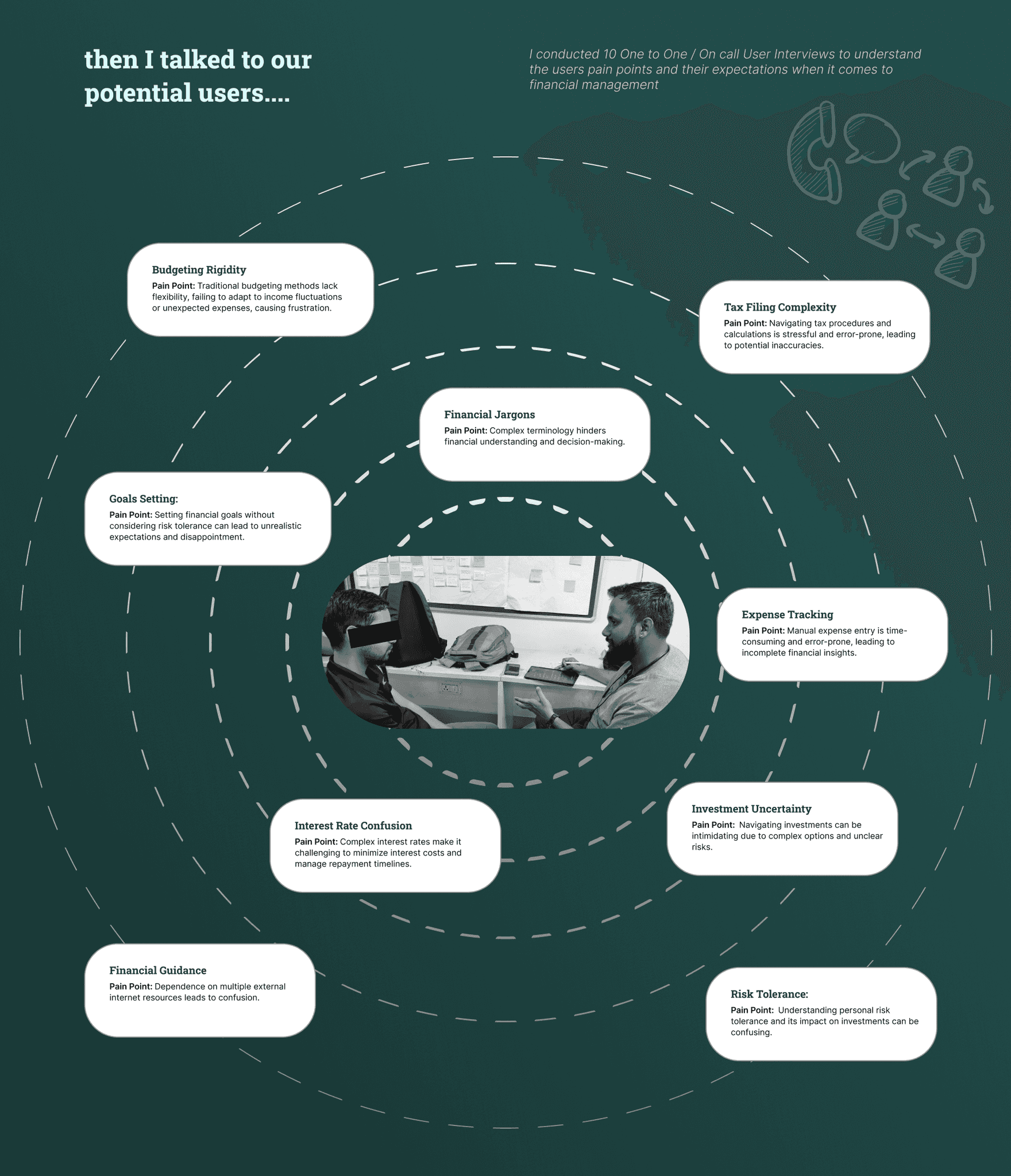
Most people do not consult financial advisors and consider themselves beginners in financial knowledge. This suggests a lack of confidence in managing finances independently. Their interest in learning more about *investing*, *tax saving*, and *budgeting* highlights key areas where they seek guidance, while *goal planning* like retirement is also a priority for some. This points to a need for accessible, educational resources in these areas.
Conclusion
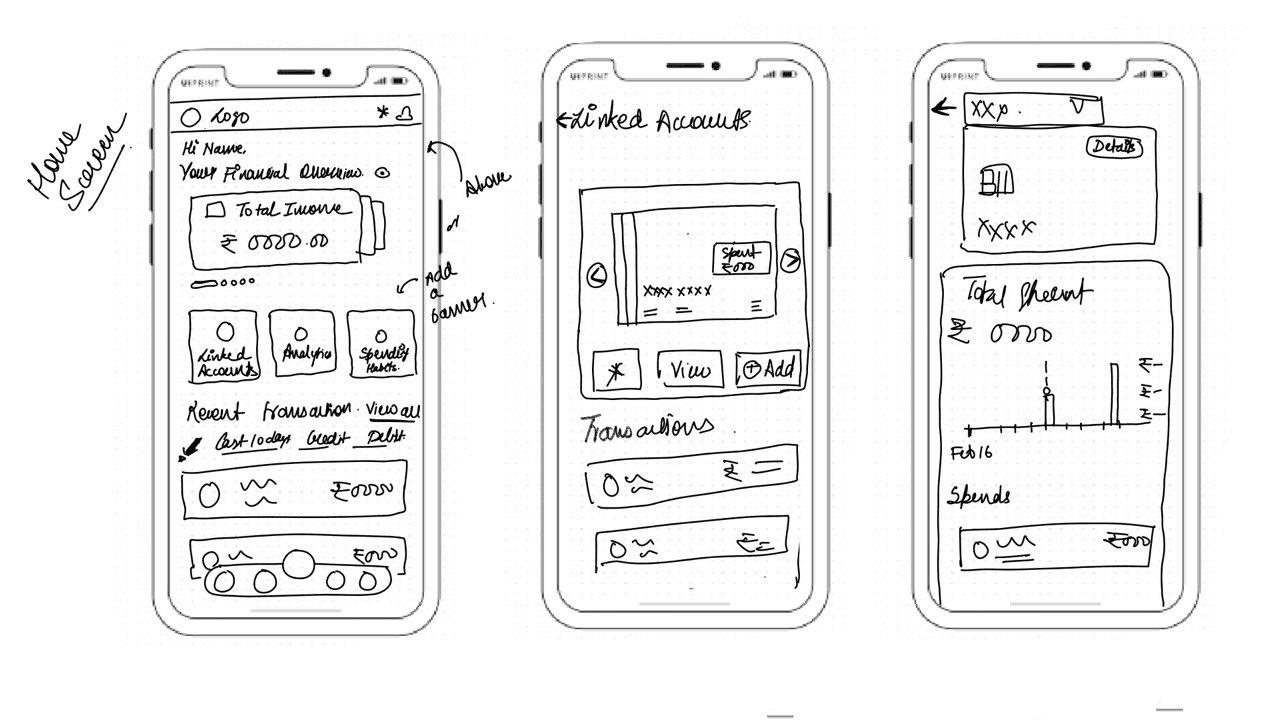
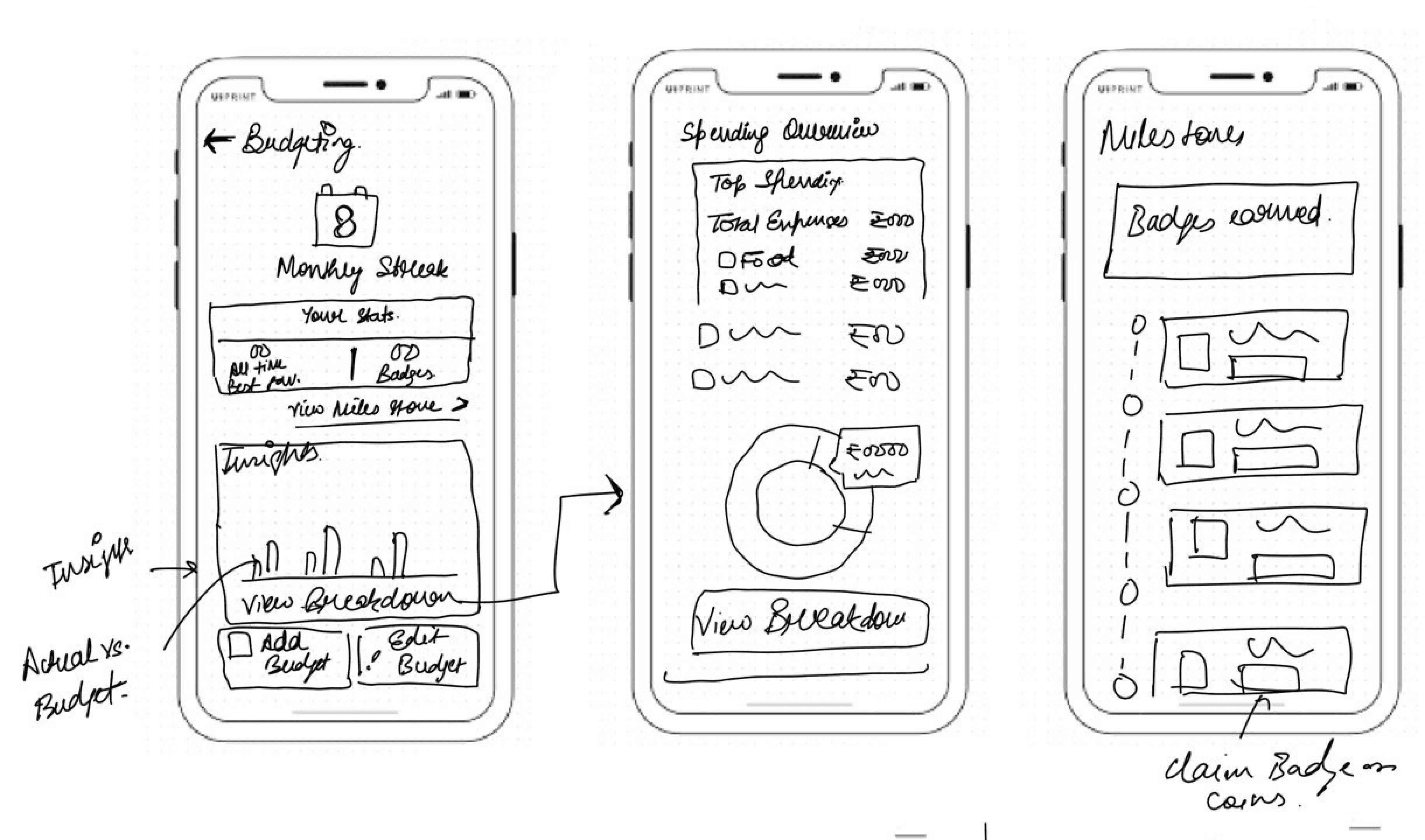
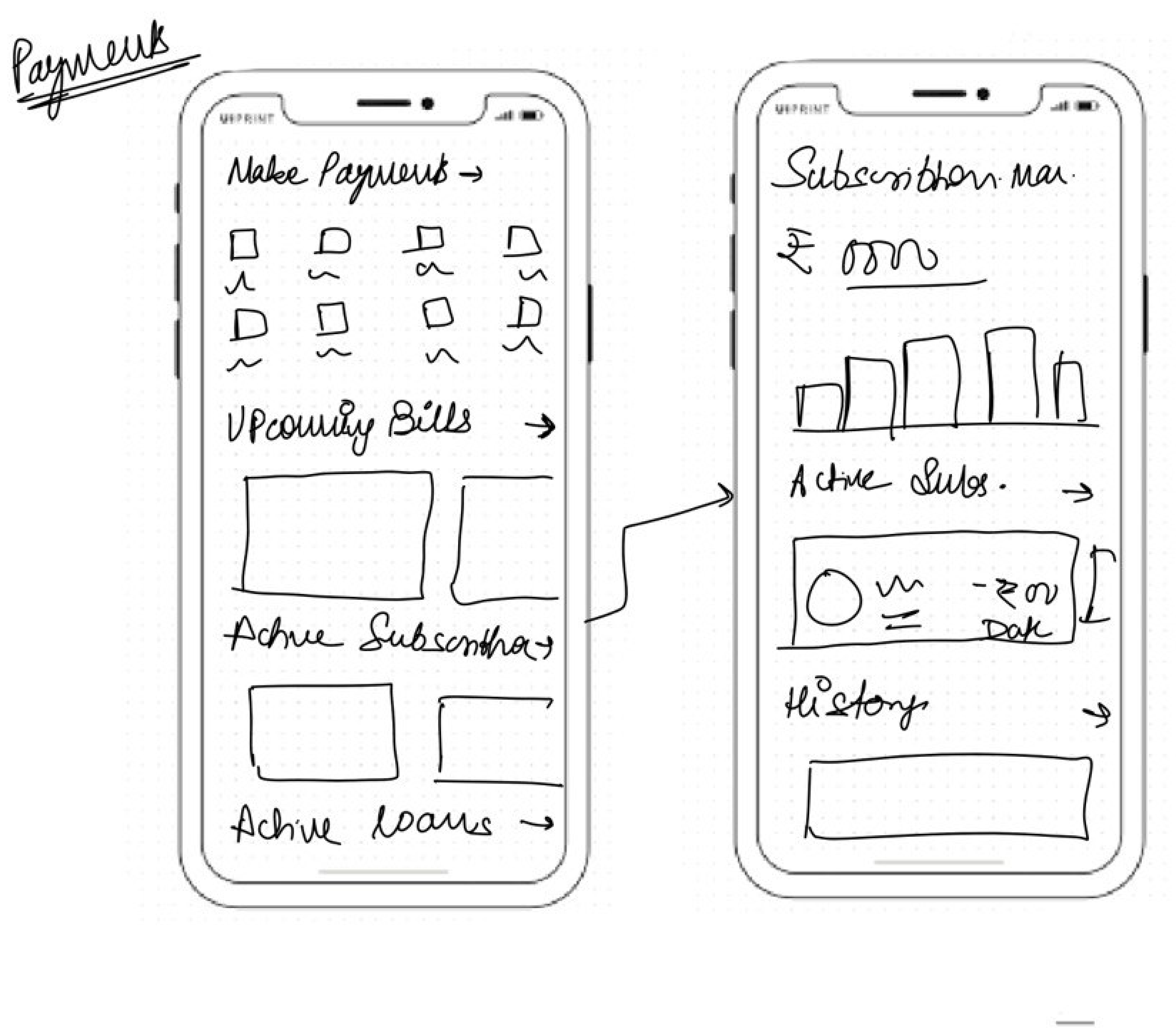
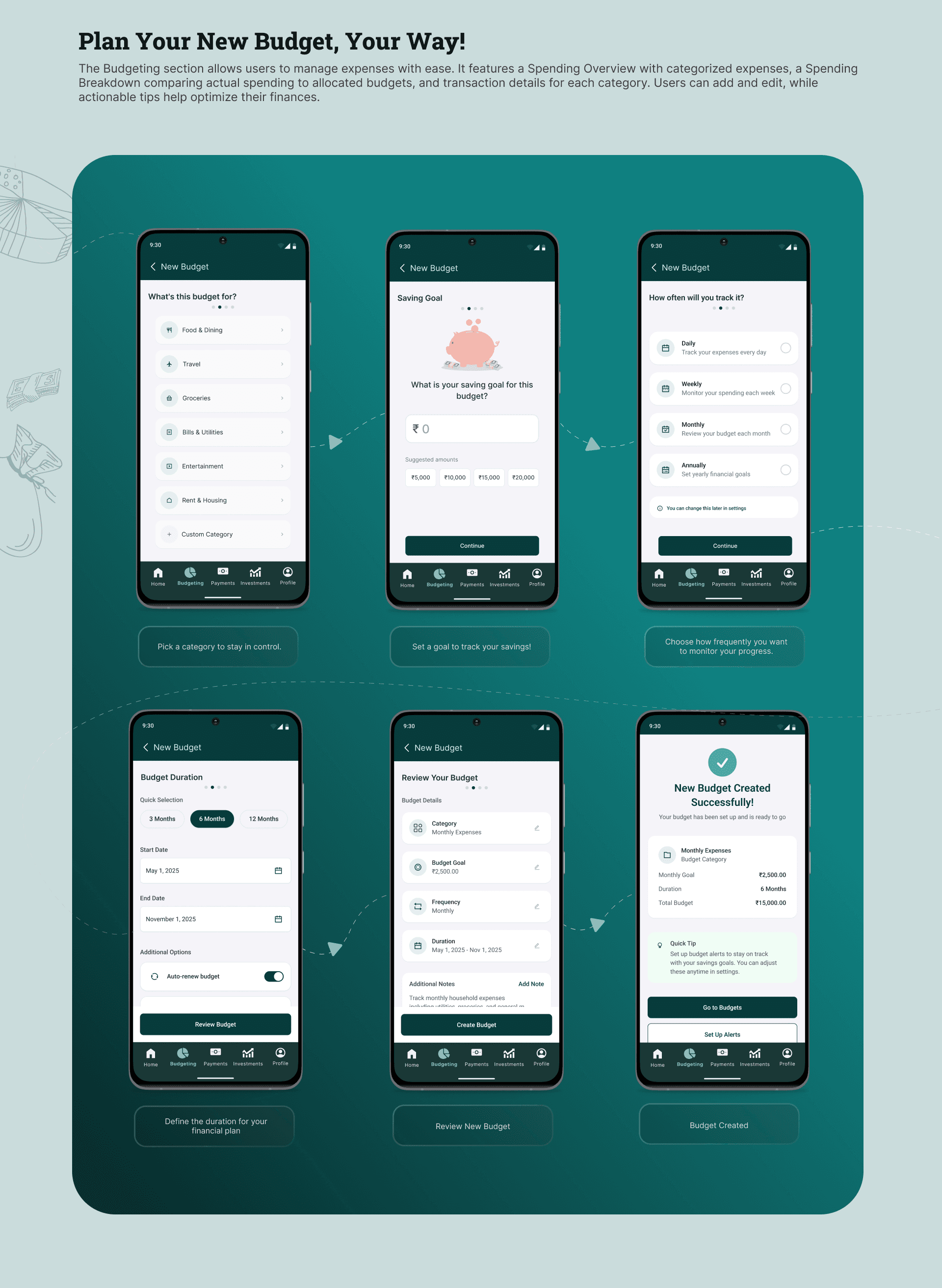
1. Simplified Expense Tracking: Add an easy digital tracker with visual aids to help users monitor spending patterns.
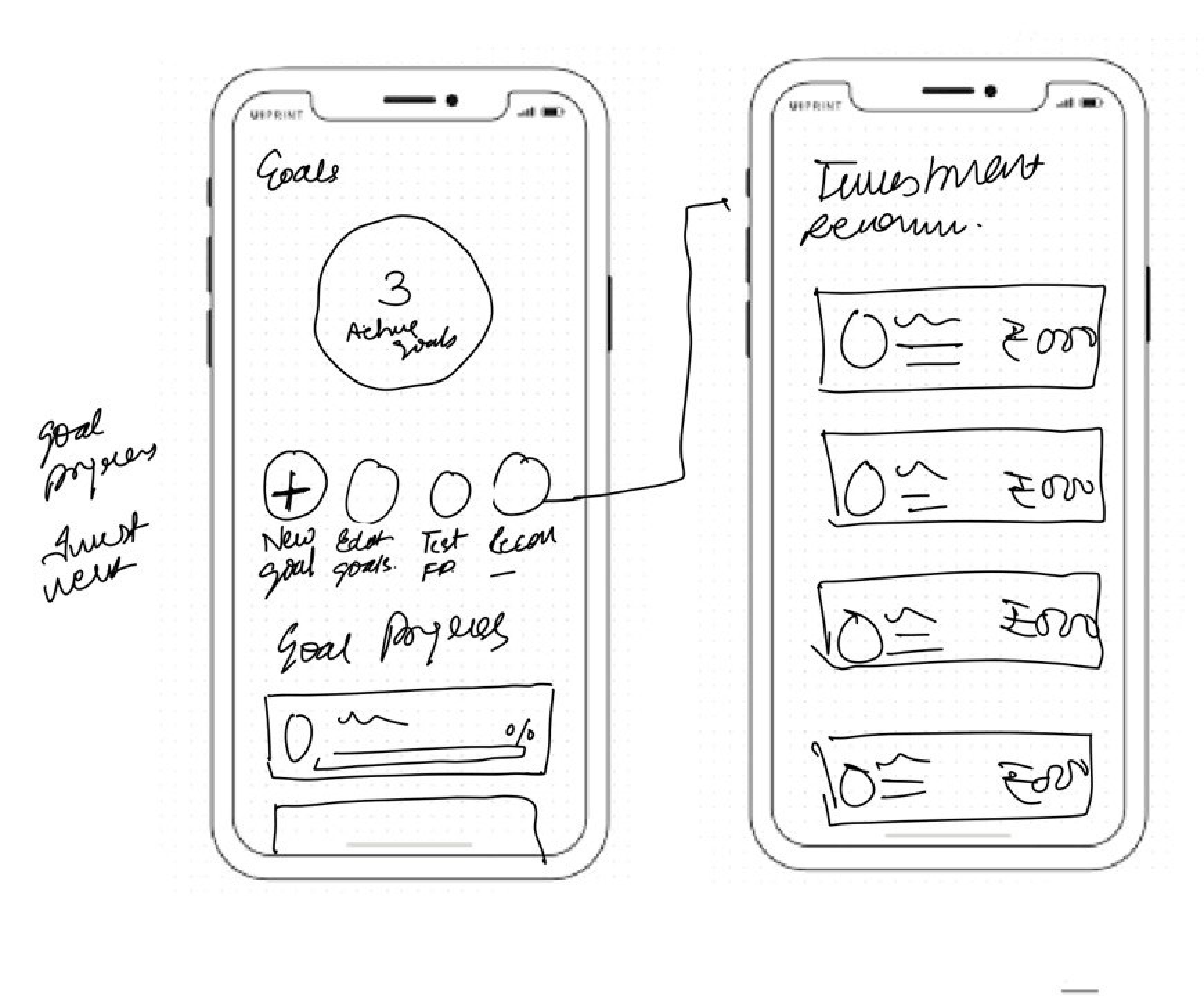
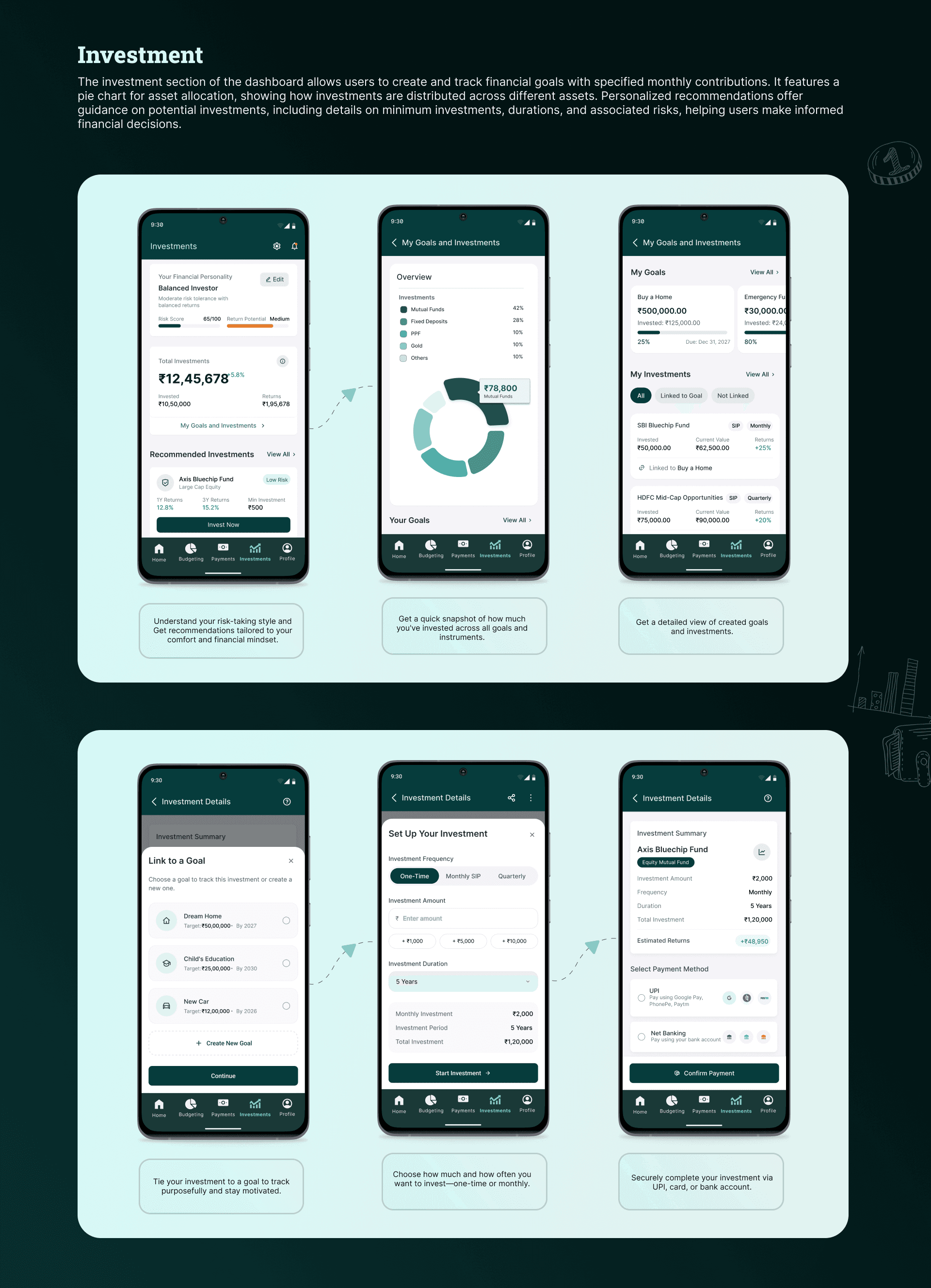
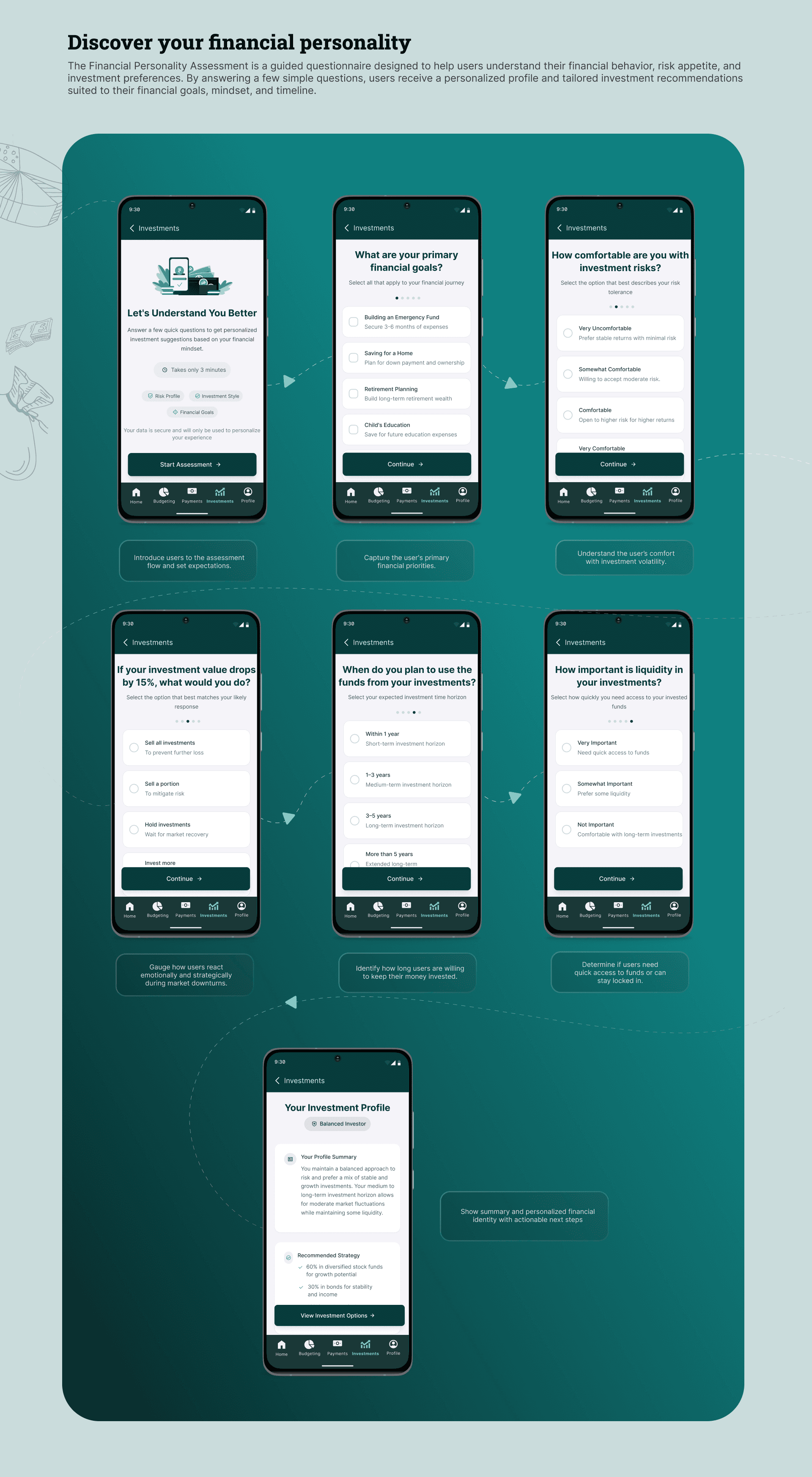
2. Personalized Recommendations: Offer tailored savings and investment advice based on goals and spending habits.
3. Educational Content: Include resources on investing, tax-saving, budgeting, and retirement to boost financial knowledge.
4. Automated Tax Tools: Integrate a tax calculator and tax-saving suggestions to simplify tax planning.
5. Goal-Based Planning: Enable users to set and track goals like saving for emergencies or retirement with visual progress indicators.
6. Flexible Investment Options: Suggest products with different liquidity levels to match user preferences.
7. Advisory Support: Offer digital advisory tools and access to experts for personalized guidance.
Features Brainstorming
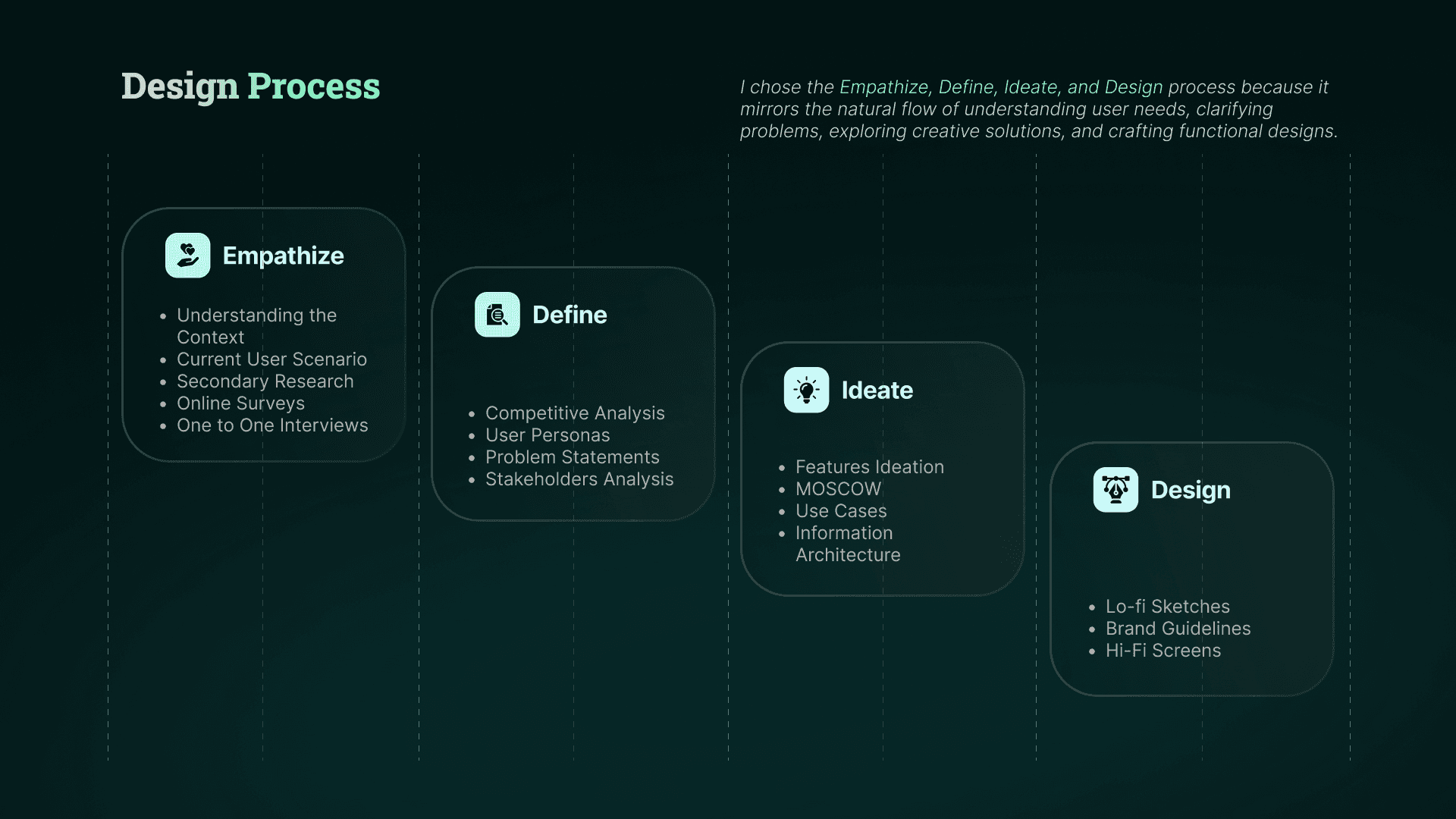
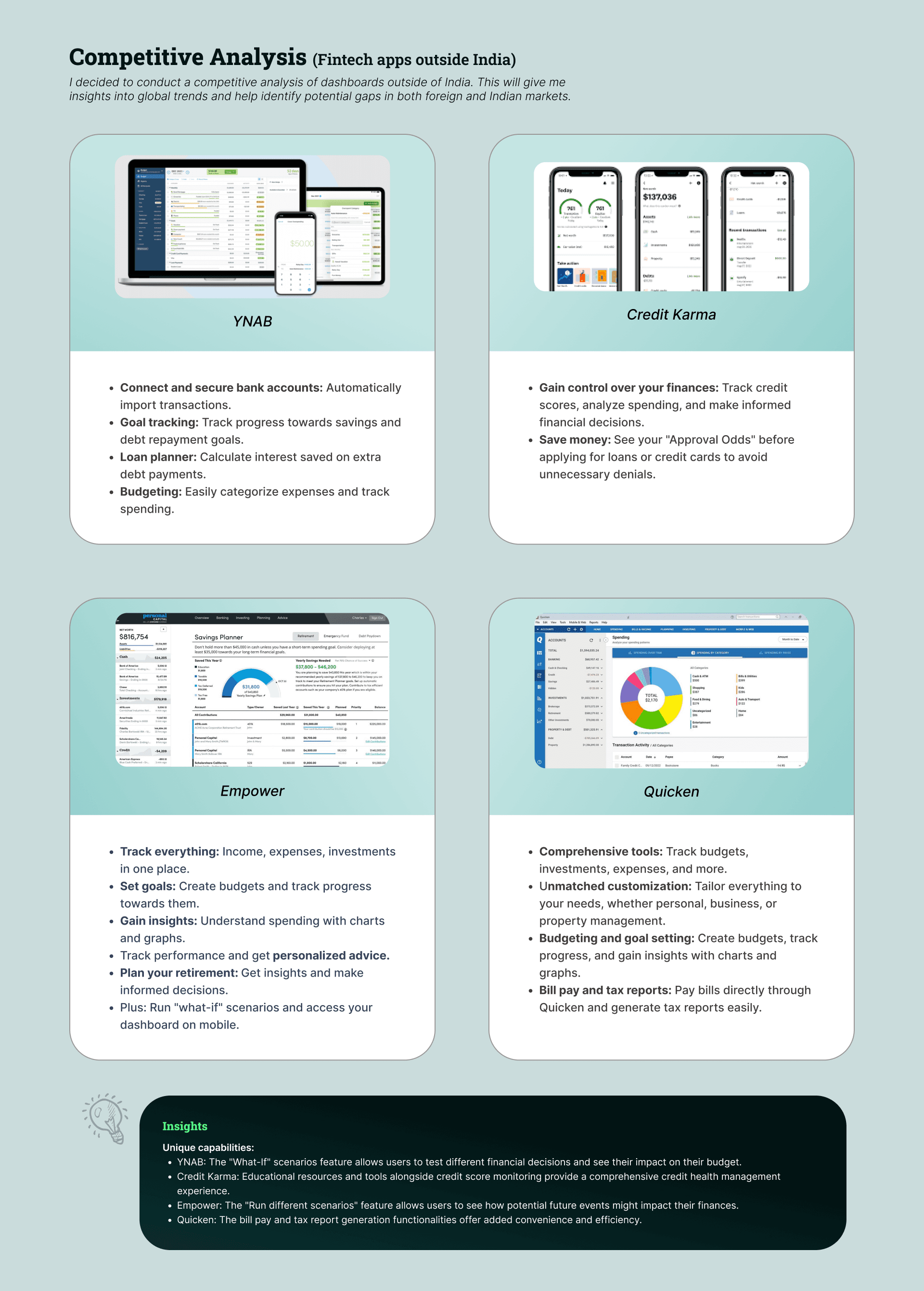
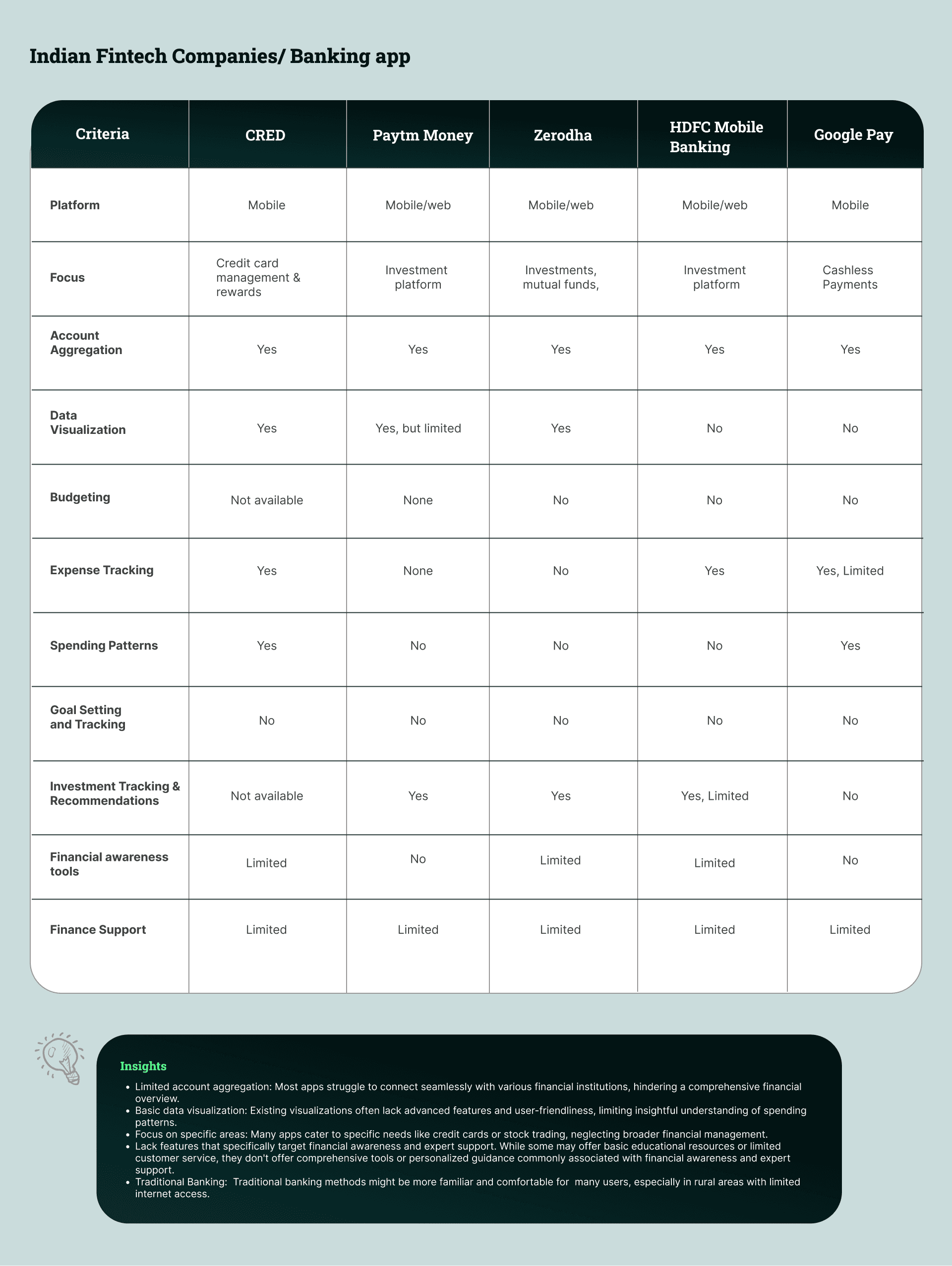
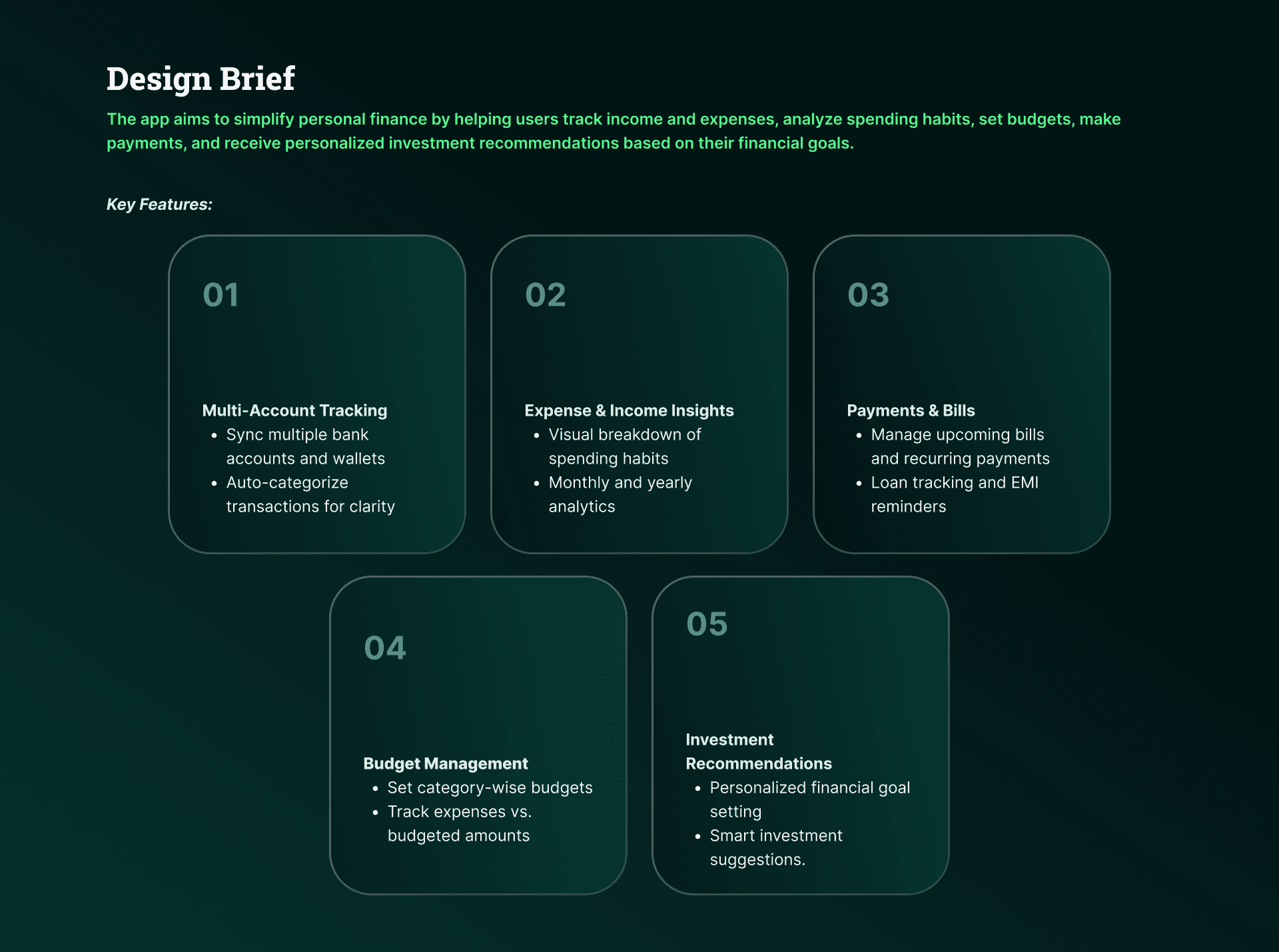
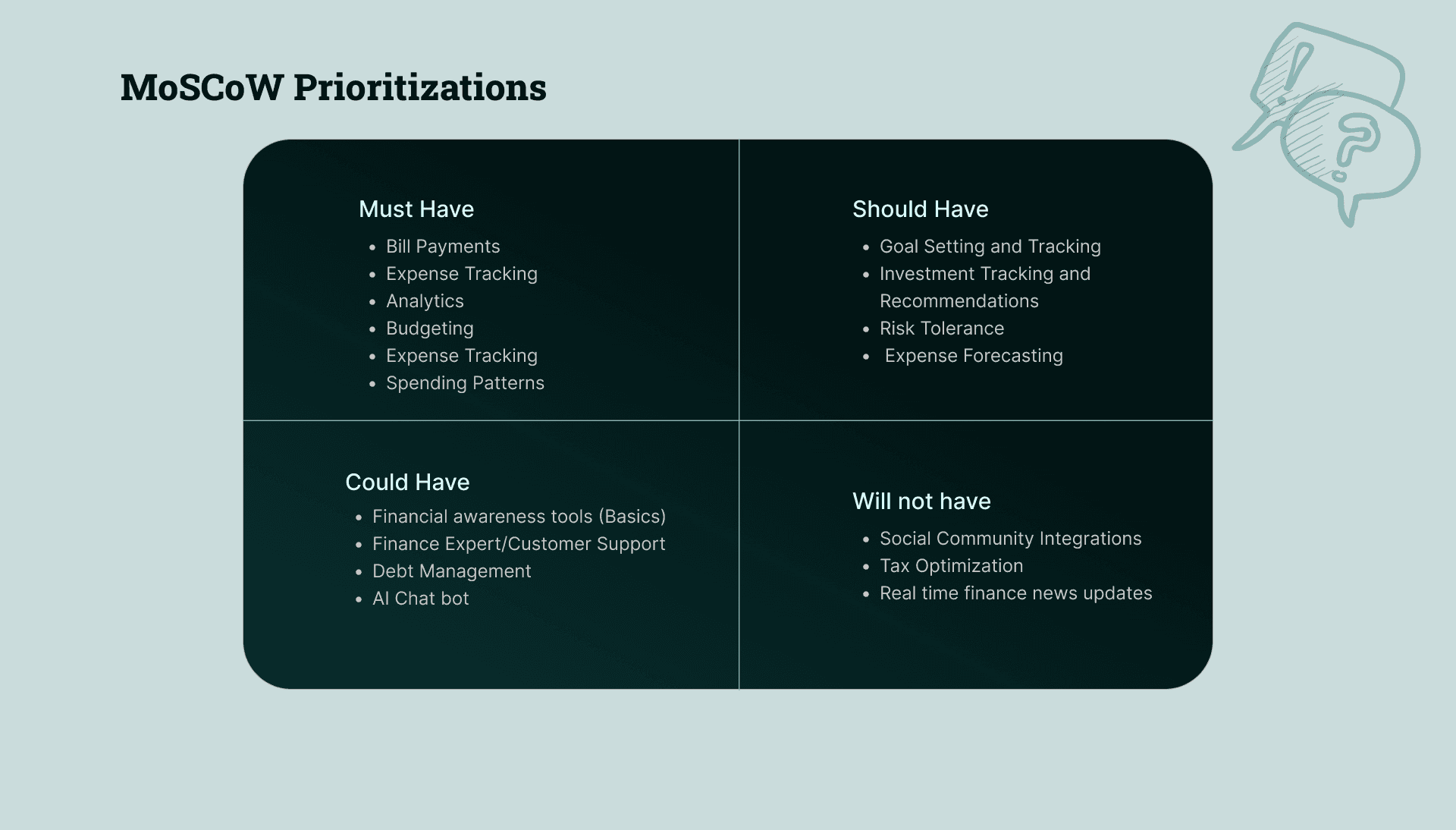
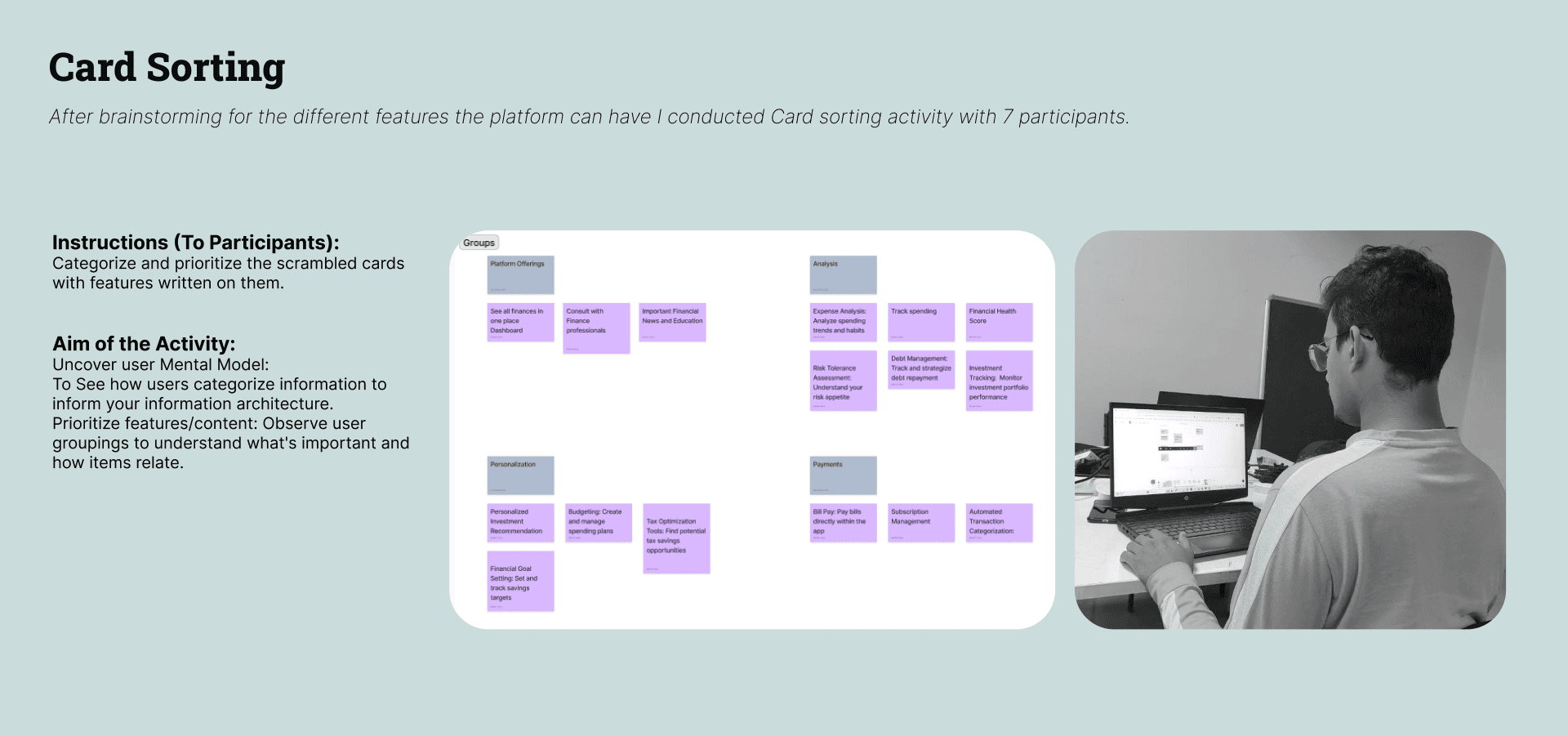
After my Primary Research, Secondary Research and Competitive analysis I proceeded for brainstorming for the different features the platform can have
Ideations