This project was completed under a non-disclosure agreement (NDA). To maintain confidentiality, specific business data, research insights, and production UI screens have been anonymized or omitted.
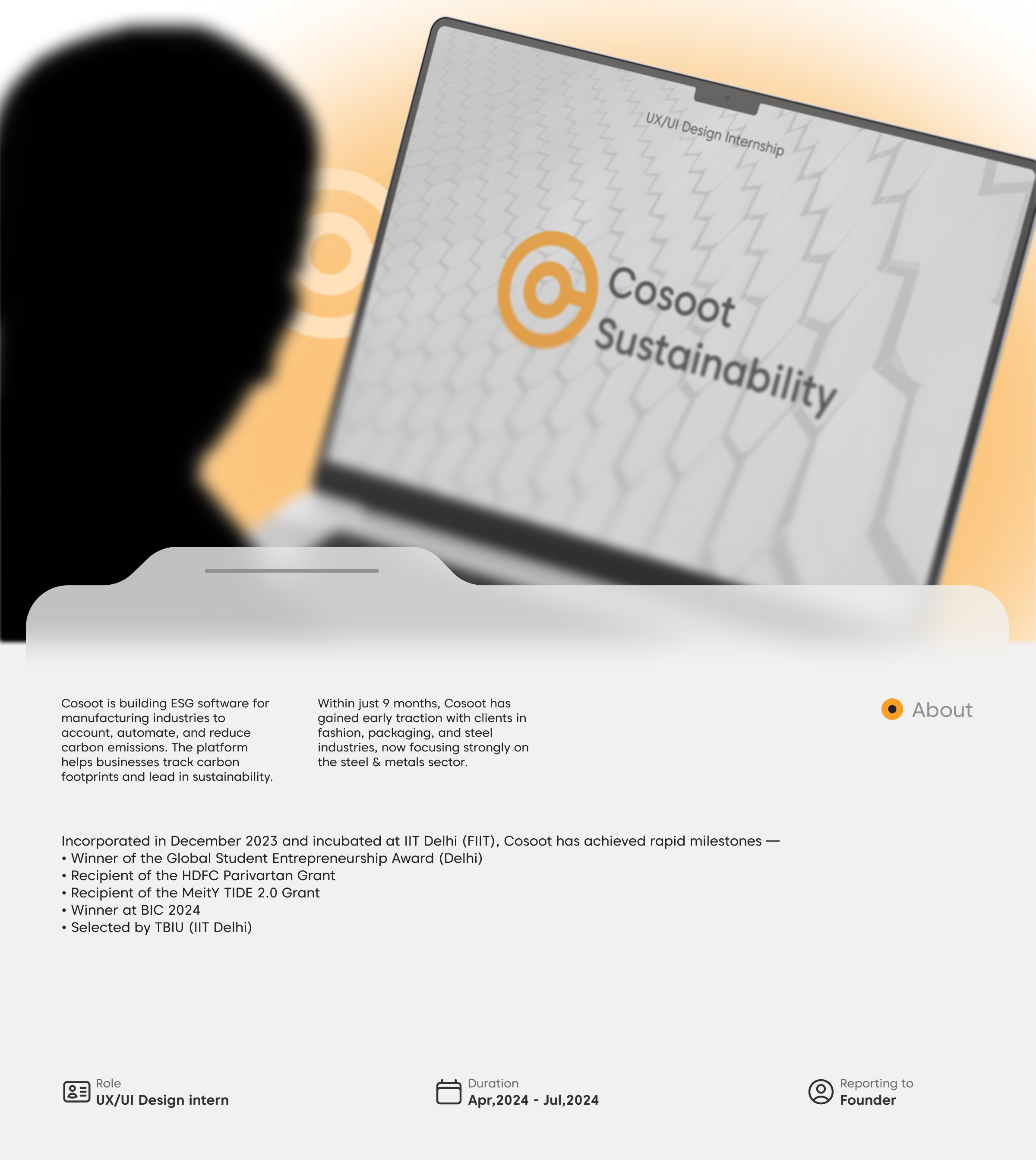
Context
Features I worked on...
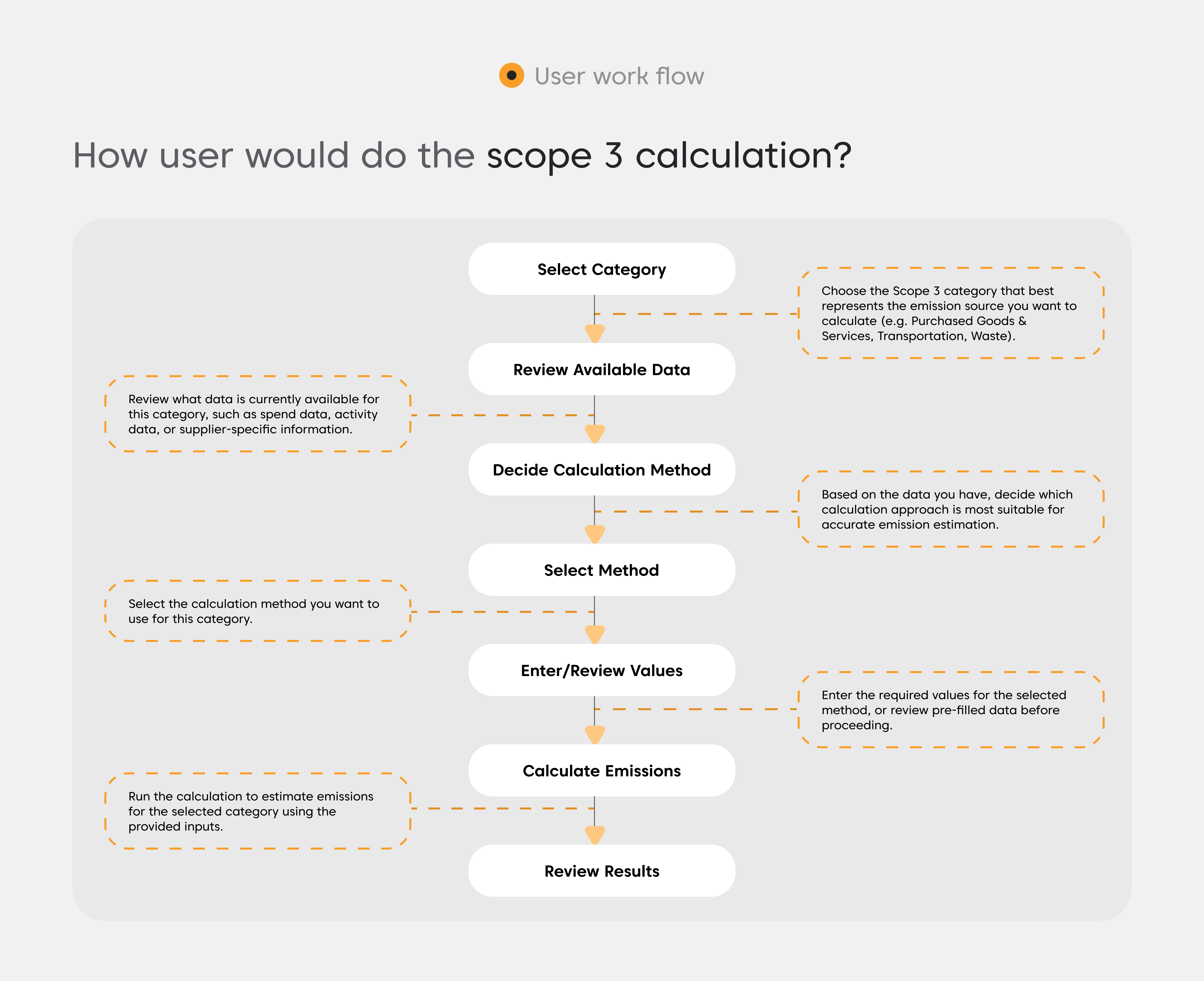
Scope 3 Calculation
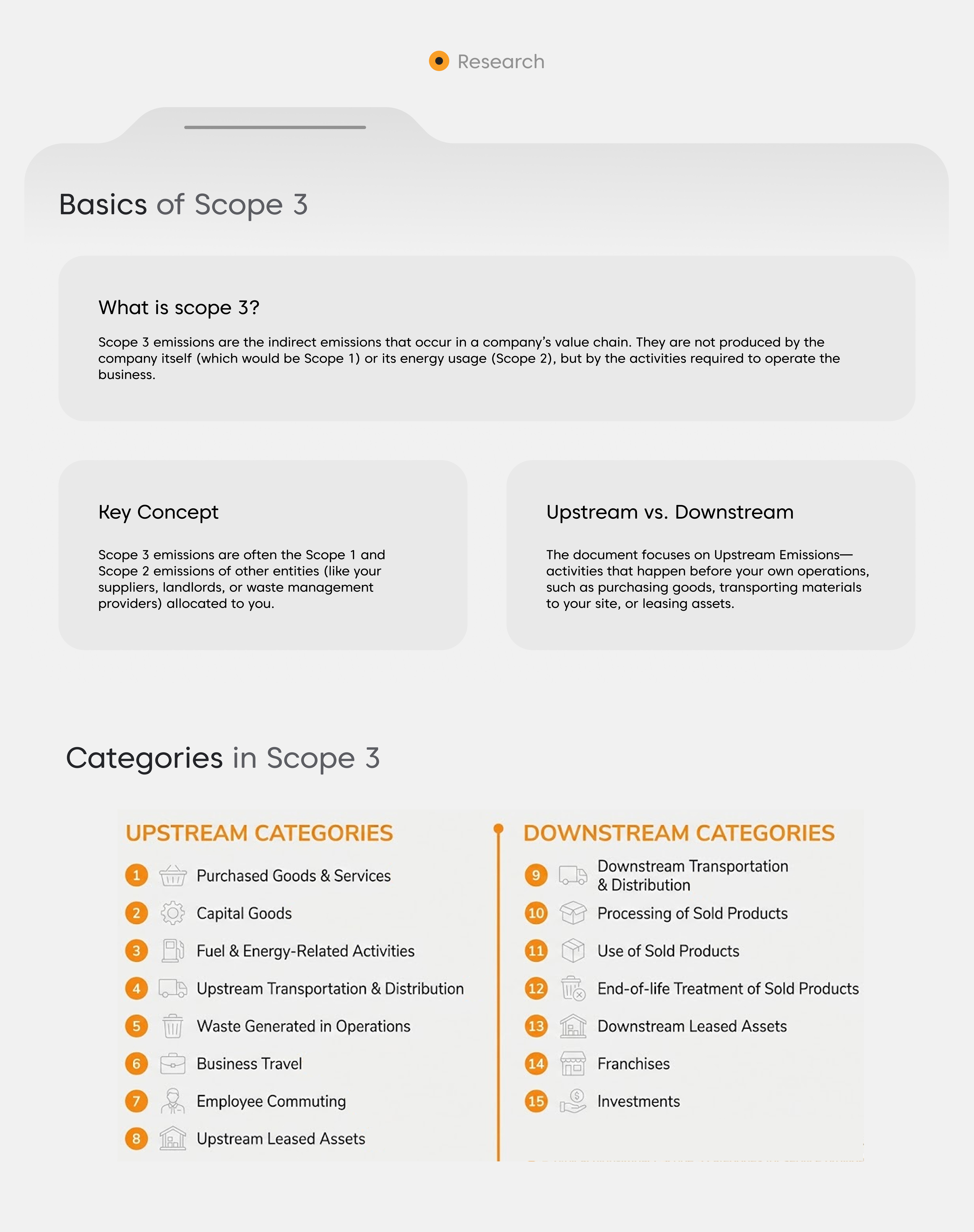
Scope 3 emissions refer to indirect greenhouse gas emissions that occur throughout a company’s value chain, both upstream and downstream — such as emissions from purchased goods, transportation, waste disposal, and product use.
Unlike Scope 1 (direct emissions) and Scope 2 (energy-related emissions), Scope 3 is harder to measure and manage because it involves multiple stakeholders and data sources.
Accurately calculating Scope 3 emissions helps organizations understand their full carbon footprint, set science-based targets, and drive supply chain sustainability.
ESG Reporting
ESG (Environmental, Social, and Governance) reporting is the process of disclosing a company’s sustainability performance to stakeholders — including investors, regulators, and customers.
It involves tracking metrics such as carbon emissions, energy usage, water consumption, labor practices, and governance standards.
Strong ESG reporting frameworks (like CBAB, GHG, and BRSR) allow companies to benchmark their progress, demonstrate accountability, and meet regulatory and investor expectations.
3. Product Footprint
A product footprint measures the environmental impact of a specific product across its entire lifecycle — from raw material extraction to production, transportation, use, and end-of-life disposal.
It helps manufacturers identify hotspots of carbon intensity, optimize design and material choices, and create eco-conscious alternatives.
Understanding product footprints enables data-driven strategies for low-carbon product development and supports eco-labeling and sustainability marketing.